Seabirds at Coquille Point
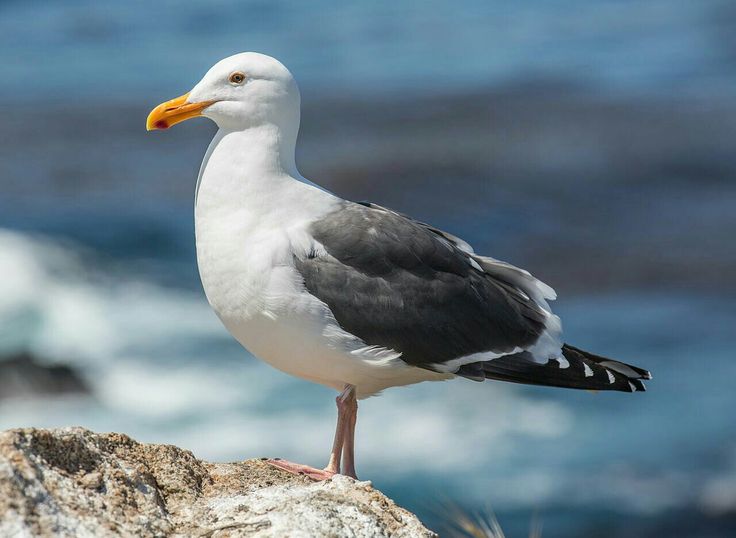
Western Gull
The large sea stacks off Bandon’s beaches are known not only for their scenic beauty, but also provide critical nesting habitats for several species of birds.
The common large gull, with a dark gray back and wings, are western gulls. It takes four years for western gulls to attain their adult plumage.
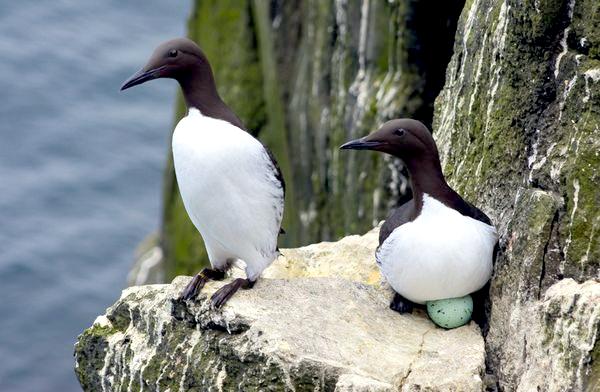
Common Murre
The black and white, colonial nesting birds covering wide ledges and the flat areas on top of sea stacks, are common murres. They spend their lives on the ocean and only return to land to lay an egg and raise a chick. After about two months on land, before the chick can even fly, they return to the ocean for the rest of the year. Common murres on the sea stacks number in the thousands and if you go to the beach on quiet ocean nights, you can hear the murres murmuring.
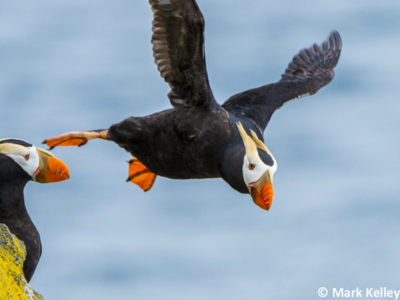
Tufted Puffin
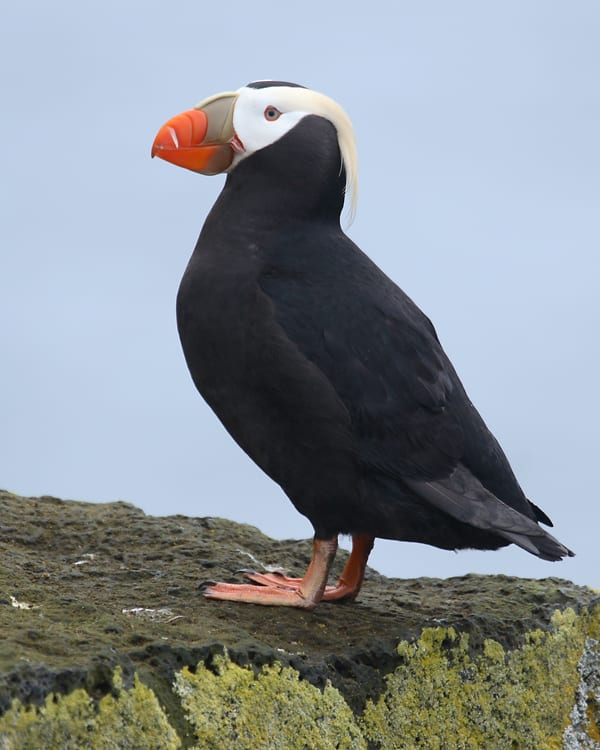
The Tufted Puffin population has declined over the years. Their bills turn orange during the breeding season, and they have long yellow head plumes extending backwards from their white faces. Their bodies are entirely black. Because their numbers are low, they will be harder to find unless you know what to look for. Their wings are short relative to their body size, and used for swimming after fish. They can be found floating on the water, sitting in front of a burrow, or zooming around the sea stacks looking like flying footballs.
There are two species of cormorants that you are likely to see on the sea stacks.
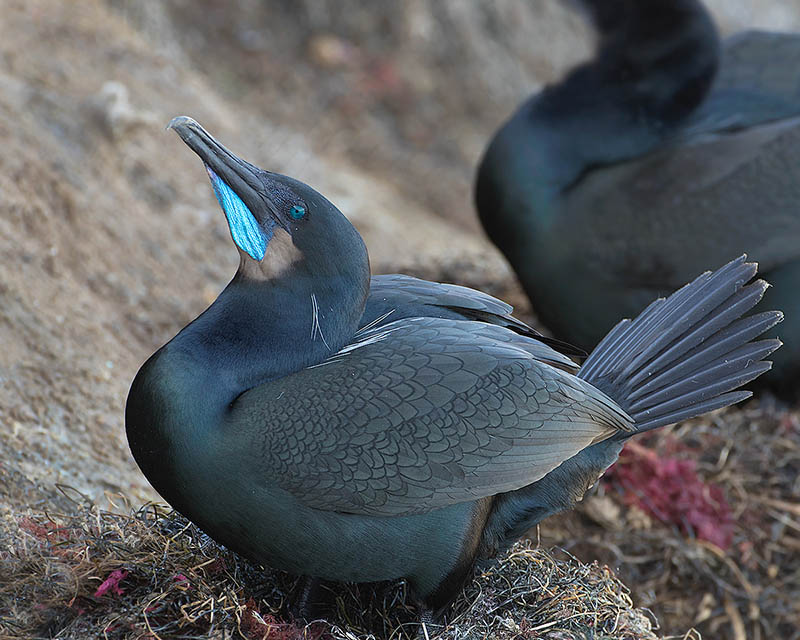
Brandt’s Cormorant
Brandt’s cormorants nest on the tops of the sea stacks, near the common murres. Look for a bright blue chin patch on an otherwise large, black bird.
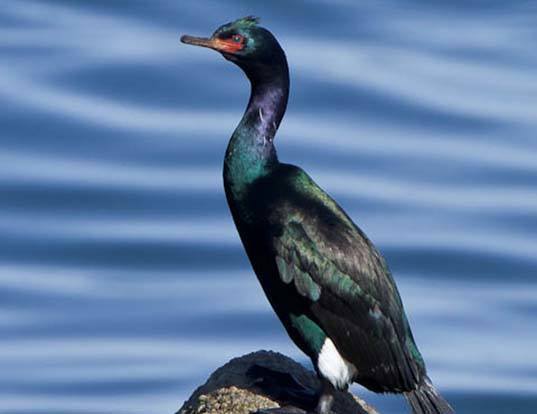
Pelagic Cormorant
Pelagic Cormorants prefer to nest on the sides of the sea stacks. Look for a slender black bird with a long neck, red on their faces and a square, white patch on their lower flanks. Cormorants dive and swim after fish using their feet for propulsion.
Other waterfowl you may see around the sea stacks are scoters, mergansers, grebes, and loons.
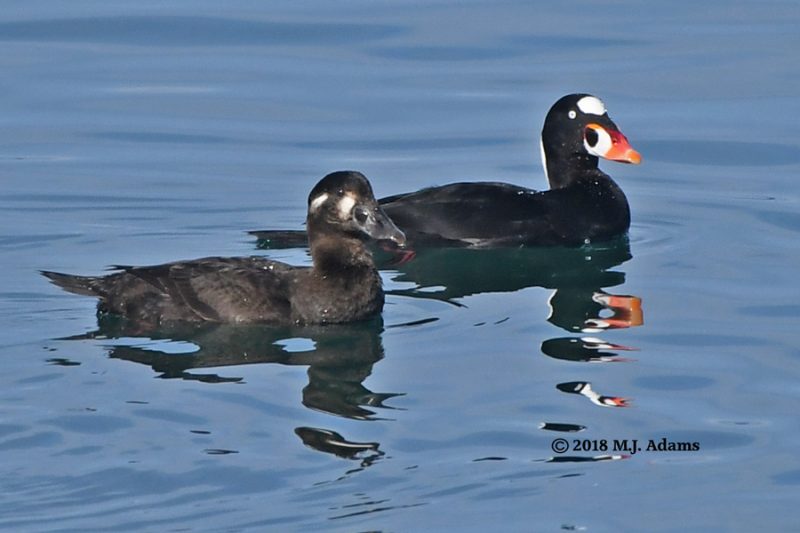
Female & Male Surf Scoters
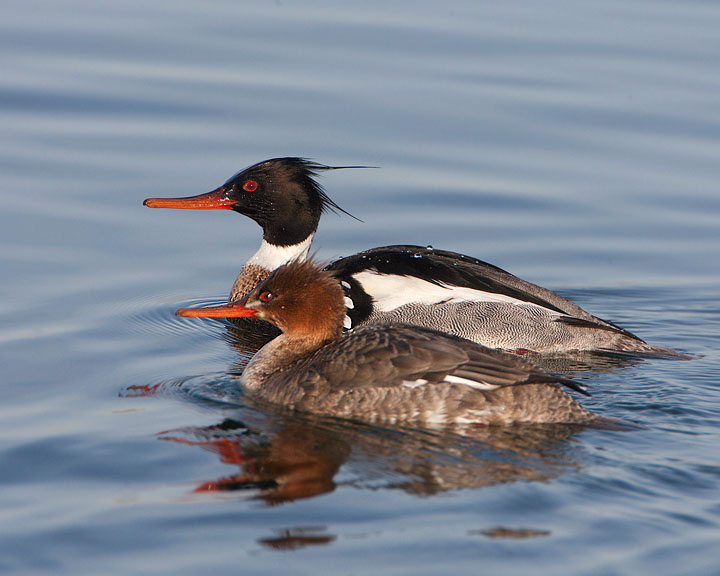
Female and Male Red-Necked Mergansers
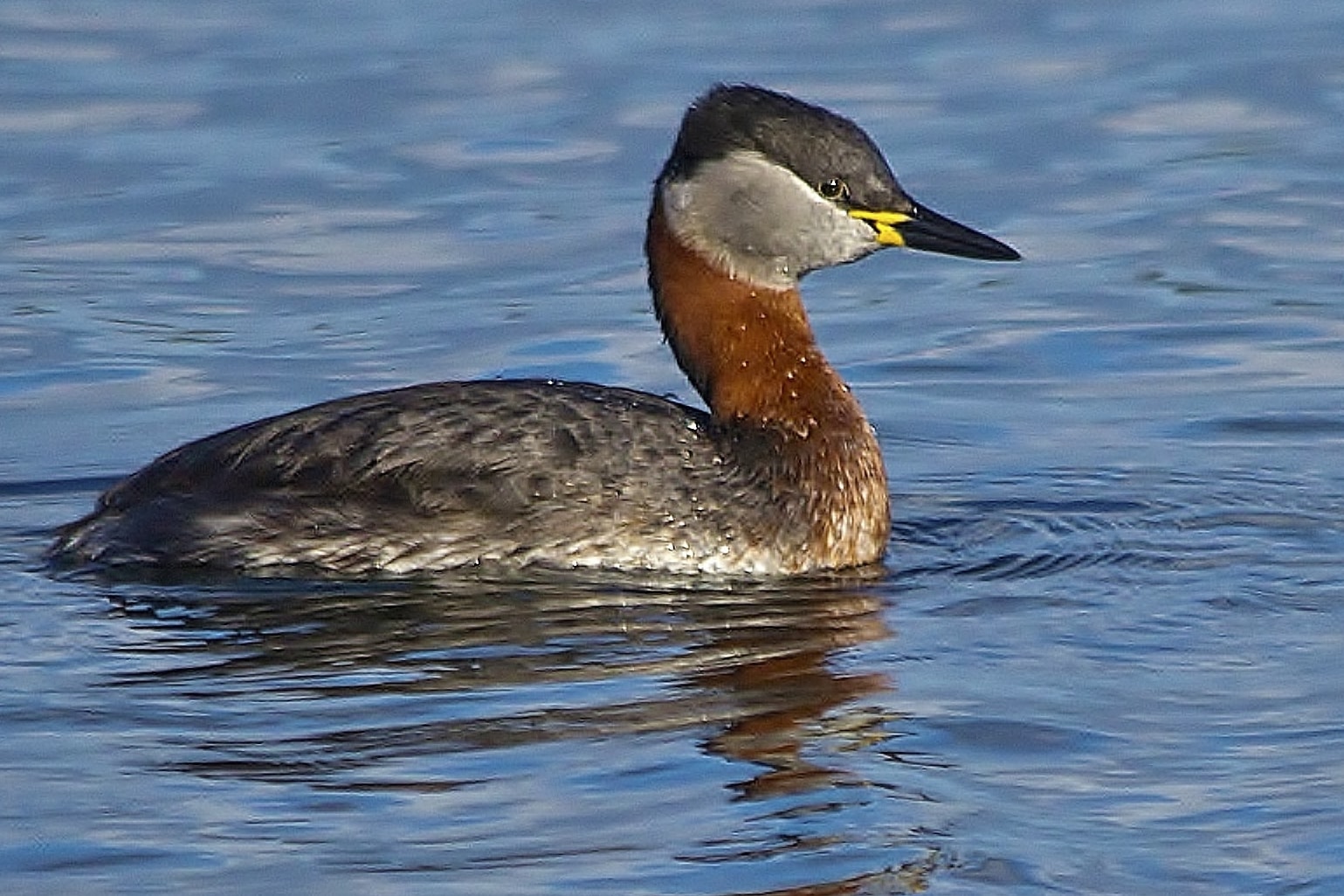
Red-Necked Grebe
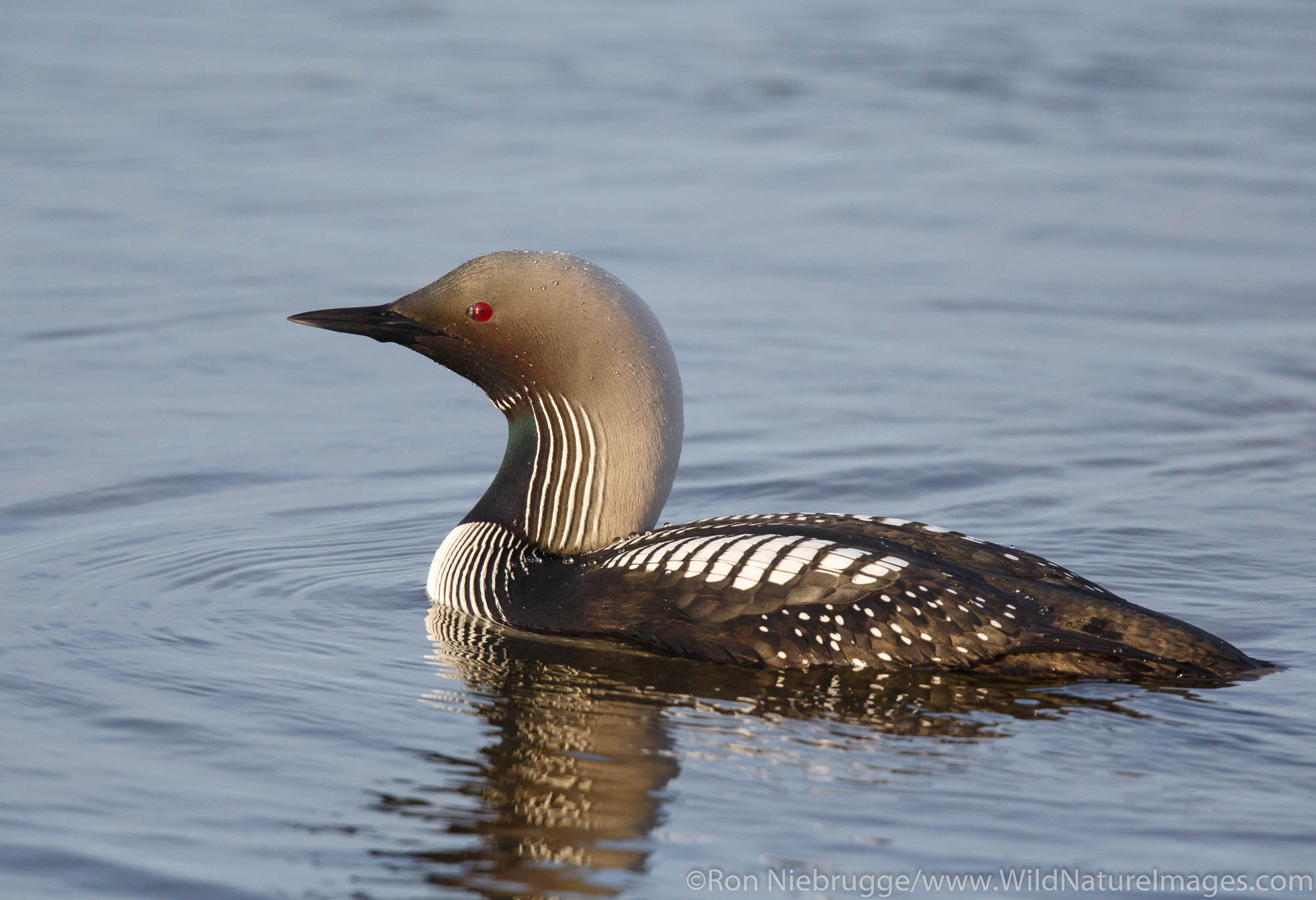
Pacific Loon
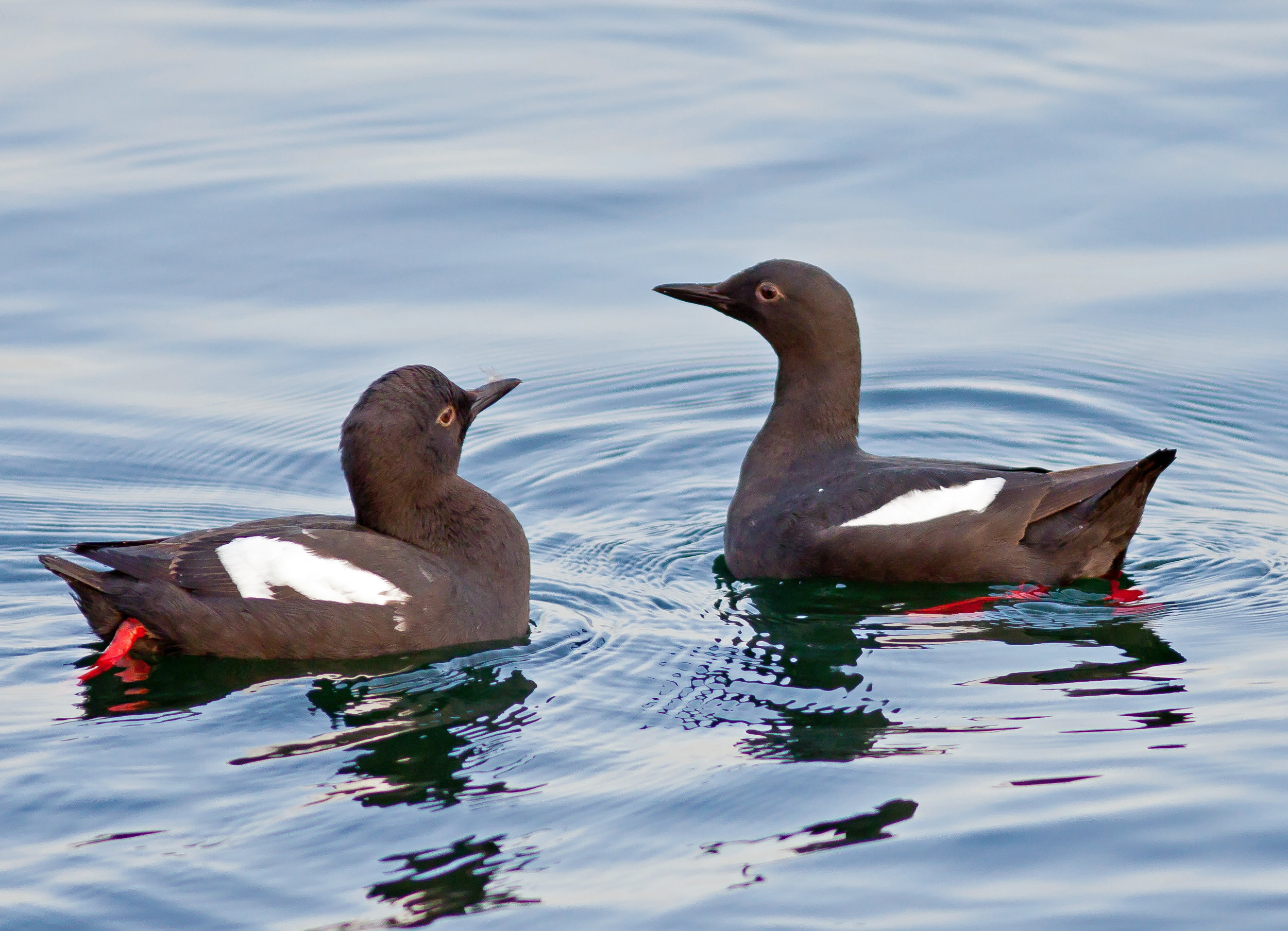
Pigeon Guillemot
Pigeon Guillemots are small, black seabirds, with a pigeon-shaped head. They can be identified by their bright red legs and feet, and a large white patch on their black wings.
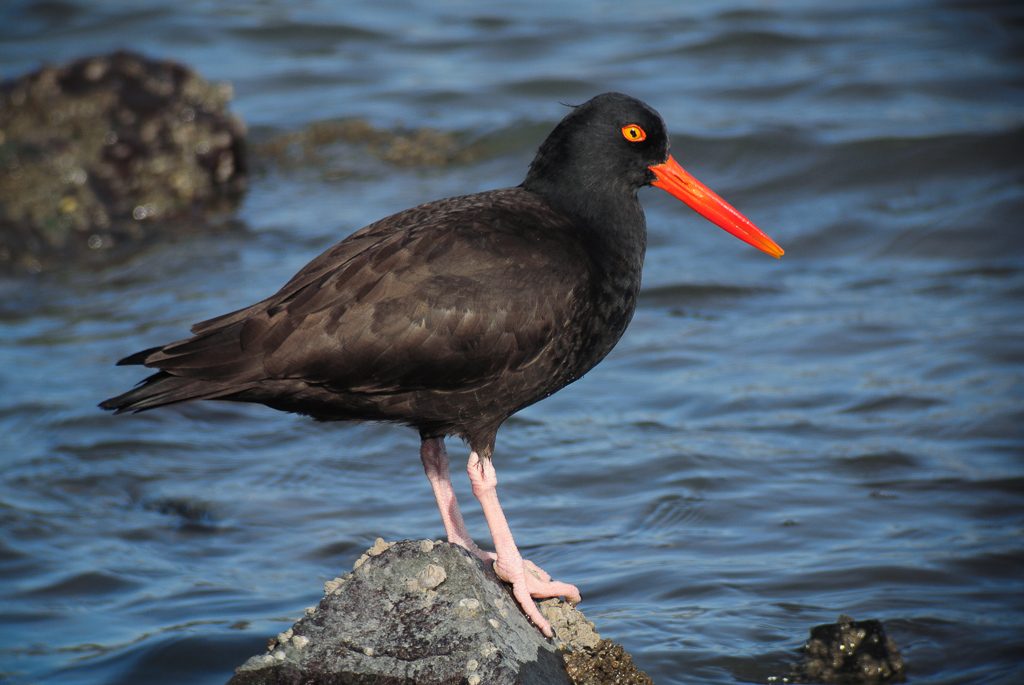
Black Oystercatcher
If you hear loud, sharp shrieks on the beach, look for tall, black shorebirds with long, bright red bills. These are Black Oystercatchers talking to each other. These birds are very territorial and easily disturbed by drones.
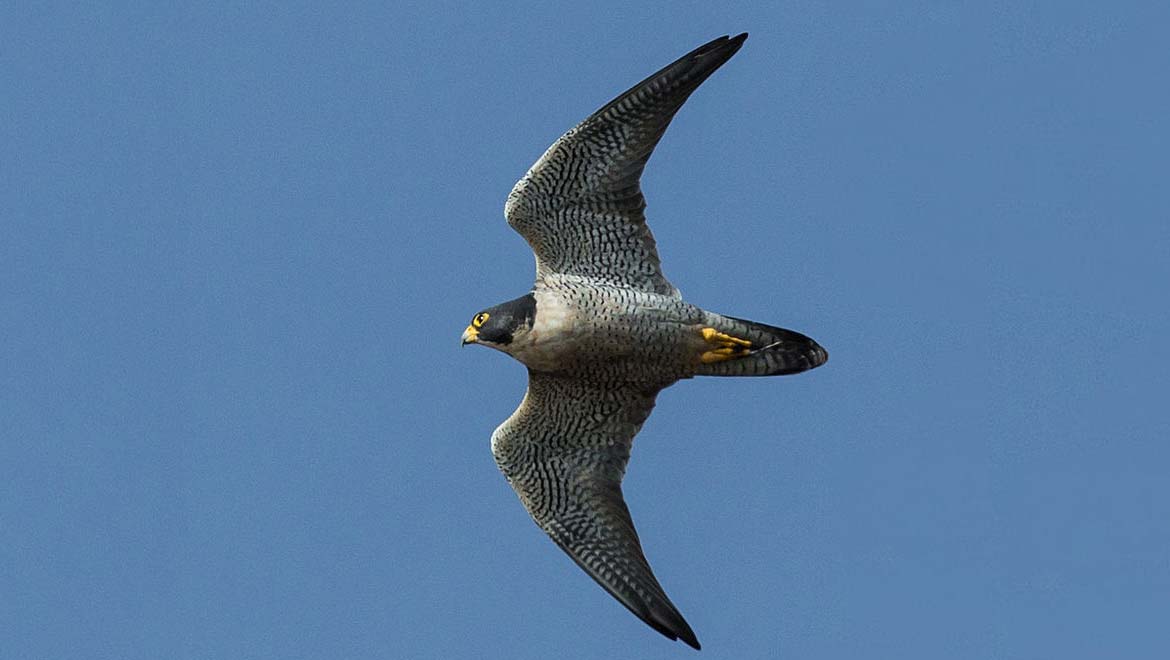
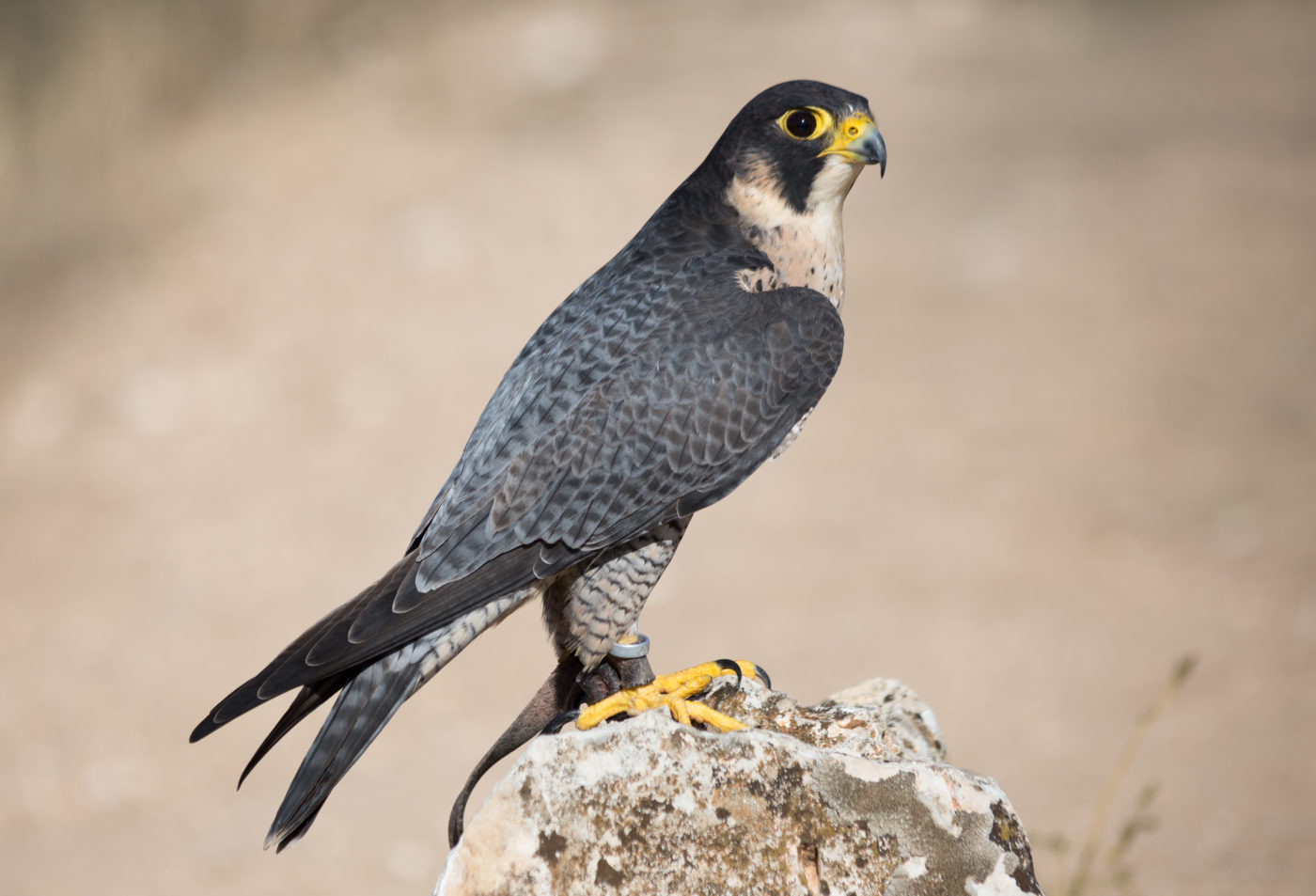
A pair of peregrine falcons nested on Face Rock in 2022. They were seen again, on Face Rock, in May 2023.